If you’ve been curious about ancestral wellness and skincare made with natural, time-honored ingredients, we’re guessing you’ve come across beef tallow skincare.
If we had to guess, you’re likely equal parts intrigued and skeptical.
After all, the idea of applying fat to your face tends to bring up a lot of questions. The biggest one being, “Does beef tallow clog pores?”.
Honestly, it’s a valid concern. Putting products on your skin is very personal, and you should always question ingredients that your body will absorb, especially if you’re considering changing your skincare routine to incorporate more holistic ingredients.
But we have a confession, we love inviting these conversations! Let’s talk about exfoliating, pore-clogging ingredients, breakouts, and yes – we’ll even answer the question on everyone’s minds “Does beef tallow clog pores?”.
Real Talk: What Exactly is Beef Tallow?
There’s a lot of talk about beef tallow lately, and you may be wondering what the hype is all about.
Believe it or not, beef tallow has been used for centuries. Our ancestors first took advantage of beef tallow by using it as a versatile cooking fat before discovering its benefits when applied to the skin.
You might be thinking that the jump from cooking fat to skincare products is kind of a leap, right? But, as it turns out, tallow is incredibly moisturizing, nourishing, and offers your skin the protection it needs from the elements and free radicals. Making it a time-honored ingredient that embraces the farm-to-skin process.
Read More: The Benefits of Using Beef Tallow for Skin & Embracing Ancestral Wellness
Does beef tallow clog pores?
But, if beef tallow was used as a cooking fat, will beef tallow clog pores and make me break out??
It’s not uncommon to assume that beef tallow is thick and leaves behind a greasy feeling when applied to the skin. Which, in turn, would offer a heavy application, clogging up your pores.
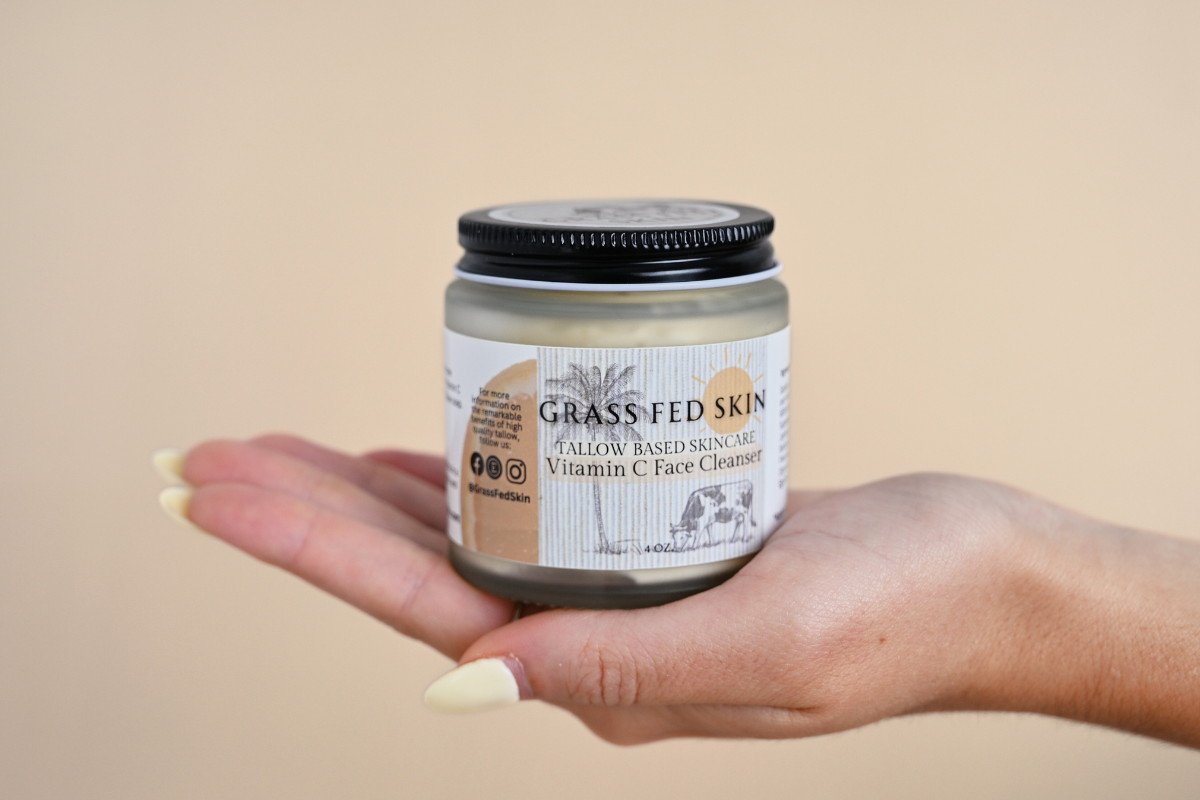
But that actually couldn’t be further from the truth. Remember how we mentioned that beef tallow closely matches our skin’s natural oils? Beef tallow is 98% identical to our bodies’ own naturally created sebum. This little-known fact is often left out of the conversation when considering the question, “Does beef tallow clog pores?”.
Beef tallow shares similar fatty acids and lipids as our skin’s sebum; it becomes a powerful skincare product that our bodies already recognize.
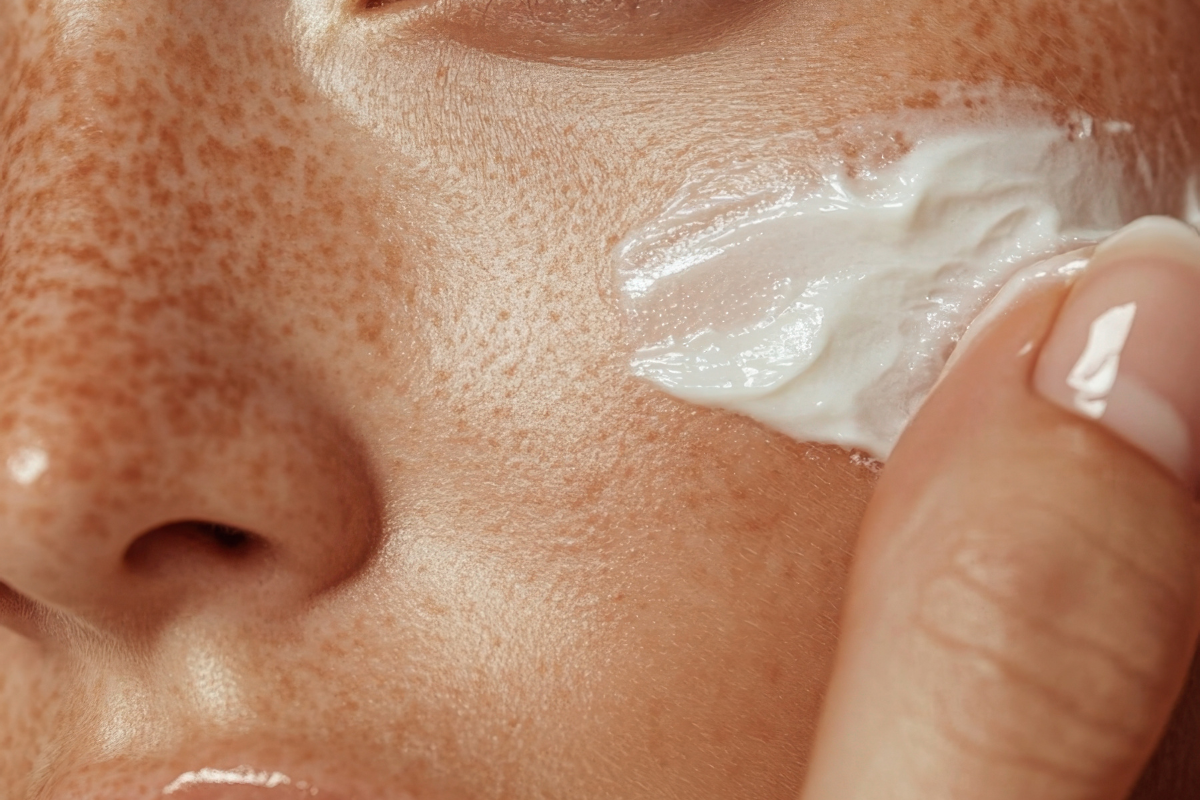
When beef tallow is properly rendered and combined with non-comedogenic ingredients (we’ll get to this in a minute!), it offers smooth, lightweight skincare that absorbs without leaving behind residue of any kind.
Needless to say, beef tallow, on its own, will not clog your pores. However, where things can get tricky is when beef tallow skincare products are infused with pore-clogging ingredients.
What Are Pore-Clogging Ingredients? A Look Inside Comedogenic vs Non-Comedogenic
In skincare, the fancy term for pore-clogging ingredients is referred to as comedogenic. This relates to an ingredient’s likelihood of clogging up your pores, causing blackheads and whiteheads (comedones), or even breakouts.
If you remember those pore-cleansing strips from your teens, then chances are you’ve already had some experience using products that contain pore-clogging ingredients.

Here are some common pore-clogging (comedogenic) ingredients that you will likely find in skincare products:
- Dimethicone – a silicone often added to skincare products for a silky finish, clogs pores, and causes irritation.
- Lanolin – a wax that is typically extracted from sheep’s wool, often leads to breakouts.
- Cetyl Acetate – a mixture of cetyl alcohol and acetic acid, known to clog pores.
Skincare ingredients that are less likely to clog your pores? Those are called non-comedogenic.
Non-comedogenic ingredients are specially formulated to avoid buildup in your pores. Allowing you to stay far away from blackheads, whiteheads, and those skin-ripping pore strips!
The catch with skincare is that many companies will advertise products as being oil-free, leading you to believe that their products are non-comedogenic. When in reality, they can just as easily contain pore-clogging ingredients aimed at causing buildup, breakouts, or even excessive dryness.
The trick to finding skincare without pore-clogging ingredients is to know what to avoid (the list above) and what to get excited about (the list below).
Here are a few of our favorite non-comedogenic ingredients:
- Organic Jojoba Oil – great for balancing the skin’s natural oil production, found in our Vitamin C Cleanser and Primal Radiance Serum.
- Hyaluronic Acid – helps hydrate the skin without clogging your pores, found in our Anti-Aging Balm and Awakening Eye Cream.
- Virgin Shea Butter – softens skin without blocking pores, found in our Tallow Face & Body Whip.
- Beeswax – the lightweight non-comedogenic counterpart to Lanolin, used as a moisturizing ingredient, found in our Anti-aging Balm.
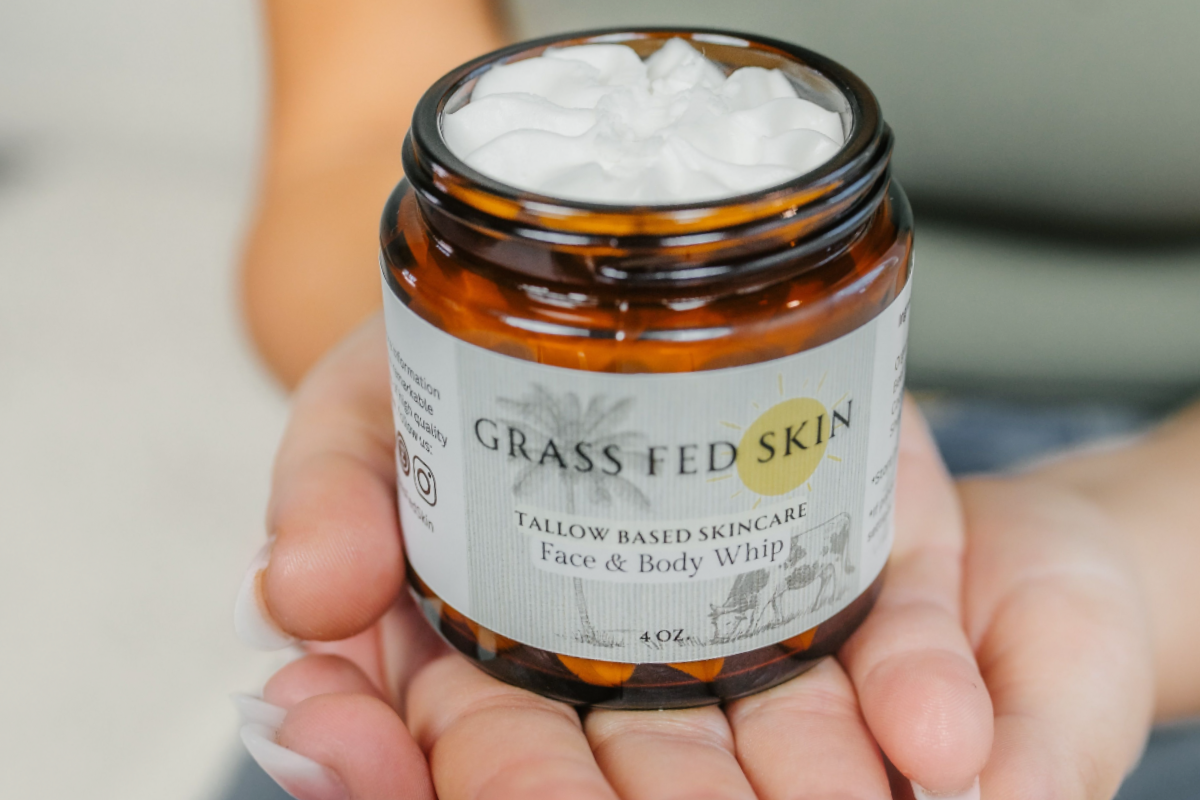
Is Beef Tallow for Skin Considered Non-Comedogenic?
Now that you know the difference between comedogenic and non-comedogenic ingredients, you might be wondering where beef tallow falls on the spectrum.
Beef tallow, in its pure form, is considered a non-comedogenic skincare ingredient. Again, answering the age-old question, does beef tallow clog pores? We say no, not by a long shot.
Beef tallow easily absorbs into your skin because it works with your body’s natural oils. Yes, even for people with sensitive skin, oily skin, or skin that is prone to acne and breakouts!
Of course, we know that everyone’s skin has its own unique makeup. Which is why we consider the entire formulation for our tallow-based skin care, combining tallow with other non-comedogenic ingredients; minimalist ingredients for maximum results.
Exfoliating is More Important Than You Think
We can’t talk about clogged pores and pore-clogging ingredients without mentioning exfoliating. Searching the label on your skincare products for comedogenic and non-comedogenic ingredients is absolutely important, don’t get us wrong about that, but so is exfoliating.
Clogged pores tend to be caused by buildup, which in turn leads to breakouts, the thing we all try our best to avoid. We all know breakouts; they tend to come at the worst possible moment, and there’s not much we can do about them once they arrive.
The trick to avoiding breakouts altogether is through preventative skincare. To do that, you have to keep your pores clean and protect the skin barrier. So while you’re busy checking skincare products for non-comedogenic ingredients, it’s just as critical to make exfoliating part of your skincare routine.
The process of exfoliating sweeps away dead skin cells from the surface of your skin. Gentle exfoliation, done 1-2x per week, is one of the best ways to avoid clogged pores and dreaded breakouts. This gets rid of dead skin on the surface before it becomes trapped and leads to buildup and breakouts.
If regular exfoliating isn’t part of your weekly skincare routine, then a shelf full of non-comedogenic skincare products will still feel heavy and ineffective on your skin.
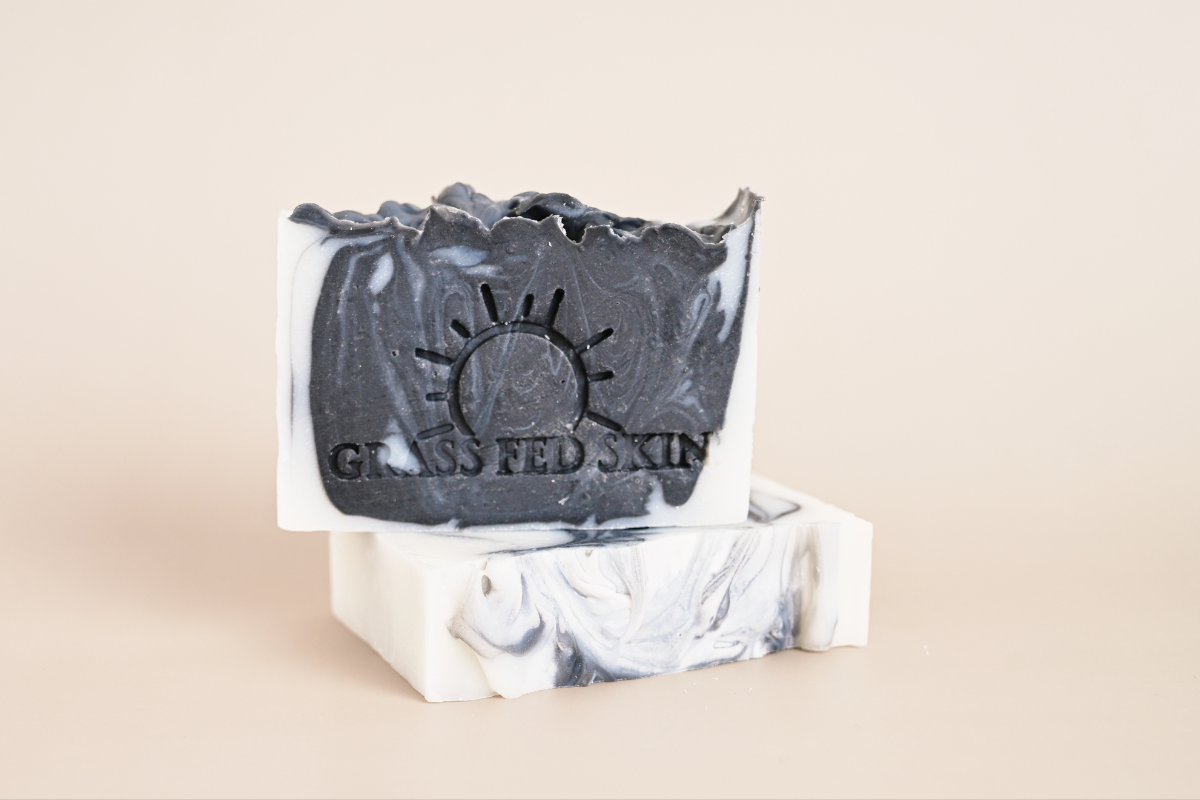
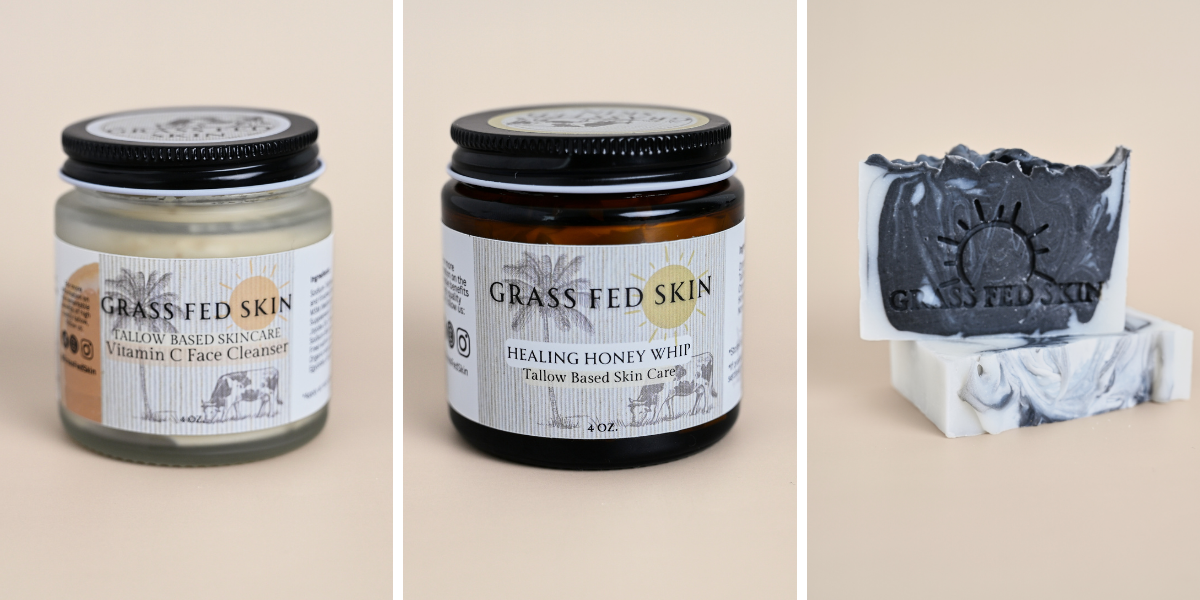
For gentle exfoliating, we recommend using our Activated Charcoal Pure Tallow Soap bar with a real luffa sponge to extract impurities from the surface of your skin.
Once you’ve exfoliated, it’s the perfect time to nourish your fresh skin with a nutrient-rich product like our Healing Honey Whip, which locks in hydration and helps support the soothing and repairing of your skin.
Help! I’m Exfoliating & Avoiding Pore-Clogging Ingredients, Why Am I Still Breaking Out?
Breakouts always have a way of finding us, don’t they? Our skin is such a delicate ecosystem, and sometimes you could be doing all the right things and still experience a breakout.
You started reading labels and ditching skincare with comedogenic ingredients, you’ve also started gently exfoliating 1-2x per week, so why the sudden breakout? What gives?
Here’s a few things to consider:
1. Toxic Load
Breakouts that seemingly come out of nowhere can be a sign that your body is trying to push out toxins. When detox organs are overburdened, your body will resort to your largest organ, the skin, to push the rest of the toxins out of your system. The entire process can be incredibly frustrating but try to be patient.
Toxic load is a term used to describe the total amount of toxins your body is exposed to. Some toxins are just inevitable, and our body has detox pathways to handle that! But when the load is too big that is when your body can start sending signals, one of those being skin issues.
Look around your environment and home for ways to make simple swaps with cleaning and personal care products so that you can reduce exposure to toxic chemicals, including hormone-disrupting ingredients.
2. Compromised Skin Barrier
When your skin barrier isn’t fully nourished or at its strongest, its defenses are down, allowing things to penetrate that it normally wouldn’t, such as dirt, bacteria, and toxins. Many times, in an attempt to treat and heal a breakout, you might find yourself resorting to harsh cleansers, toners, and exfoliants. While it may seem intuitive to treat stubborn breakouts with products that claim to do the heavy lifting, the opposite can be true.
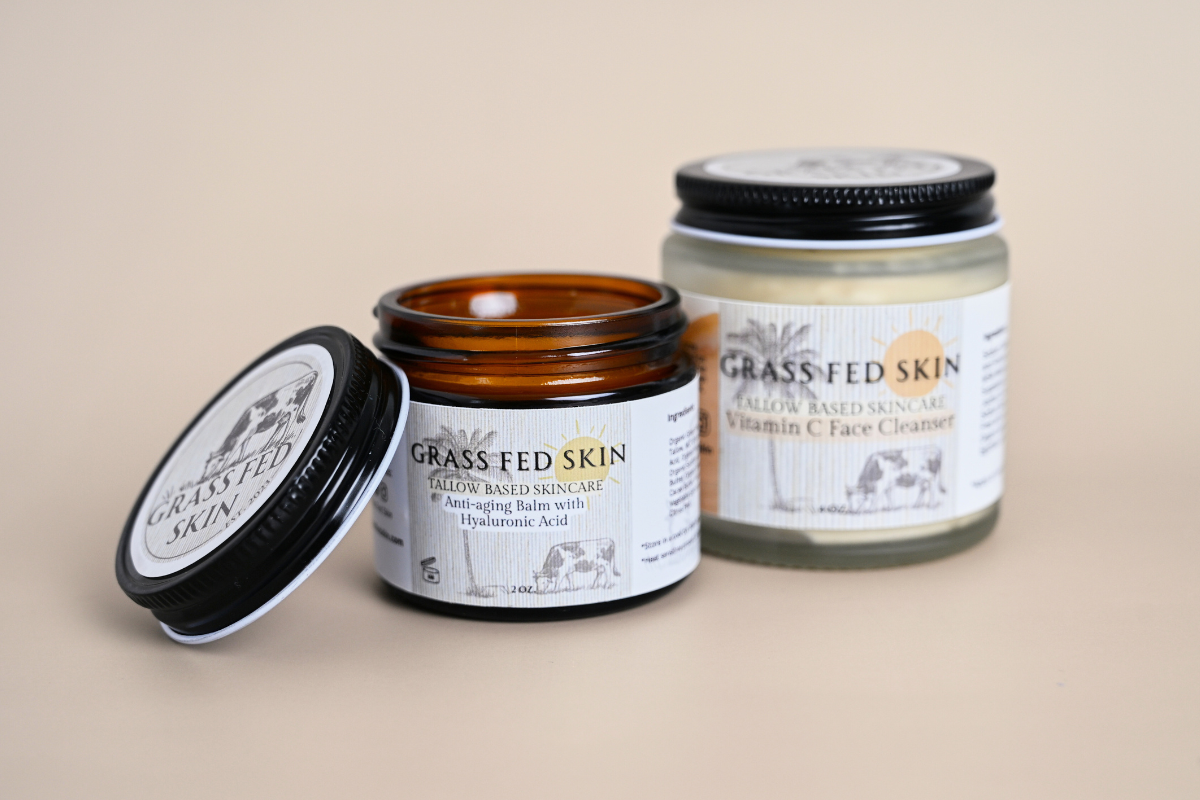
These products actually weaken and over dry the skin, which can leave it even more susceptible to future breakouts. We’re giving you permission to put a stop to the cycle right now by trying oil and fat-based cleansers and moisturizers. Oil and fat-based cleansers are rarely, if ever, the cause of a breakout. They gently and effectively remove surface pollutants. If you want to get started with beef tallow skincare, you can try our Vitamin C Cleanser combined with our Anti-Aging Balm. These two products combined are gentle and nourishing to the skin barrier.
3. Lather, Rinse, Repeat
Caring for your skin means daily cleansing with the right amount of product, rinsing thoroughly, and applying moisturizer.
It also means thoroughly removing makeup, exfoliating 1-2x per week, and protecting your skin from the sun – after you’ve made your natural Vitamin D, of course. Your skincare routine can really be that easy and uncomplicated.
But missing a few days of cleansing, your weekly exfoliating, or sleeping with your makeup on can easily trigger a breakout. Keep your routine consistent, and you can prevent breakouts before they ever start.
Read More: Finding the Balance in Safe Sun Exposure with Tallow Sunscreen
Ancestral Skincare: Your Skin as an Ecosystem
One of our core beliefs when it comes to ancestral skincare is sourcing natural ingredients to support the biggest organ in your body, your skin!
In fact, your skin is an entire living, breathing ecosystem. As with any ecosystem, it thrives through balance. To maintain that balance in your skin, you have to nourish it, exfoliate it, and avoid clogging your pores.
Ancestral skincare takes things a step further when it comes to looking at that ecosystem of yours and considers what your skin recognizes and what it needs to be fed to be maintained.
That means moving toward low-tox ingredients and embracing time-honored ingredients like beef tallow.
The Age-Old Question: Does Beef Tallow Clog Pores?
When our organic suet tallow is properly rendered and combined with natural non-comedogenic ingredients, then no, beef tallow does not clog pores.
As part of a balanced skincare routine, tallow is moisturizing, nourishing, and offers your skin the support it needs to thrive as an ecosystem, without triggering breakouts.
Join the Ancestral Skincare Movement! A little curiosity goes a long way when it comes to exploring ancestral skincare.
If you’re ready to try skincare products that contain simple, effective, natural (non-pore-clogging) ingredients, here’s an easy way to start:
- Cleanse – with our Vitamin C Face Cleanser.
- Moisturize – with our Healing Honey Whip.
- Exfoliate – with our Activated Charcoal Pure Tallow Soap Bar.