
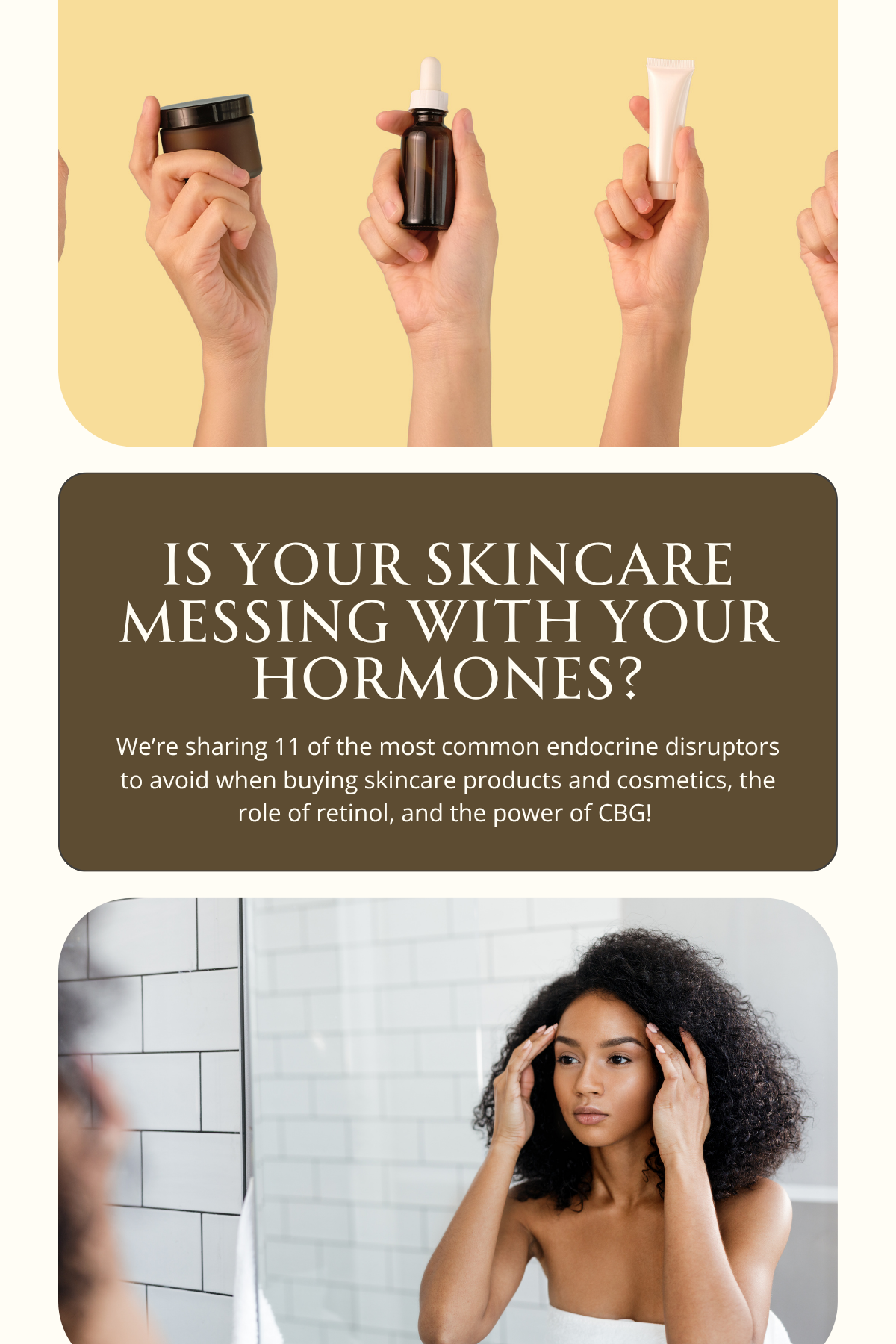
On your journey to healthy skin, you might want to know more about your skincare products. Like what’s hiding out on the label, and how it can affect more than just your glowing complexion.
If you find yourself leaning in the direction of being ingredient curious, we’re ready to open up the conversation to endocrine disrupting chemicals and the commonly used phrase – hormone disruptors.
To make it easy, we’ve put together a quick guide to 11 common endocrine disruptors for you to be mindful of when choosing skincare products, and we’re also talking about the natural, highly effective alternatives to use instead.
We’ll be discussing the difference between your endocrine system and hormones while breaking down one of our all-time favorite anti-aging ingredients, CBG. Let’s dive right in!
What are Endocrine Disrupting Chemicals & Hormone Disruptors?
We’re sure you’ve heard the term hormone disruptors before. It’s so often talked about when considering the food choices available to us in the grocery stores. However, endocrine disrupting chemicals are frequently used in skincare products too.
These toxic chemicals can be found in prescriptions, over-the-counter skincare, and even the cosmetics sold at high-end retailers.
What’s the difference between endocrine disruptors and hormone disruptors?
The short answer: the terms are used interchangeably and essentially mean the same thing. If you want to get technical, here’s the difference:
- Your endocrine system refers to the entire organization of glands that work together to secrete your hormones.
- Meanwhile, your hormones are the chemical messengers that travel through your bloodstream, delivering their message to your organs and tissues.
They both have really big jobs in your body, and they work closely together to regulate growth, development, metabolism, mood, and reproduction. They have a big job to do when it comes to triggering responses in the body!
There is very little regulation in the United States around ingredient safety in personal care products. This means that when you’re shopping for skincare, many brands use questionable ingredients that can be absorbed through the skin and enter the bloodstream.
In the next section, we’ll highlight some of the top offenders.
Common Disruptors to Avoid in Skincare Products
Fun Fact: Did you know the European Union has banned over 1,500 chemicals from being used in personal care products?
Guess how many are banned by the United States? Let’s just say it’s in the double digits…
There are thousands of ingredients out there that could be endocrine disruptors, some with more research than others to back it up. There are databases you can use to check ingredient safety such as EWG Skin Deep where you can check specific products for ingredient safety.
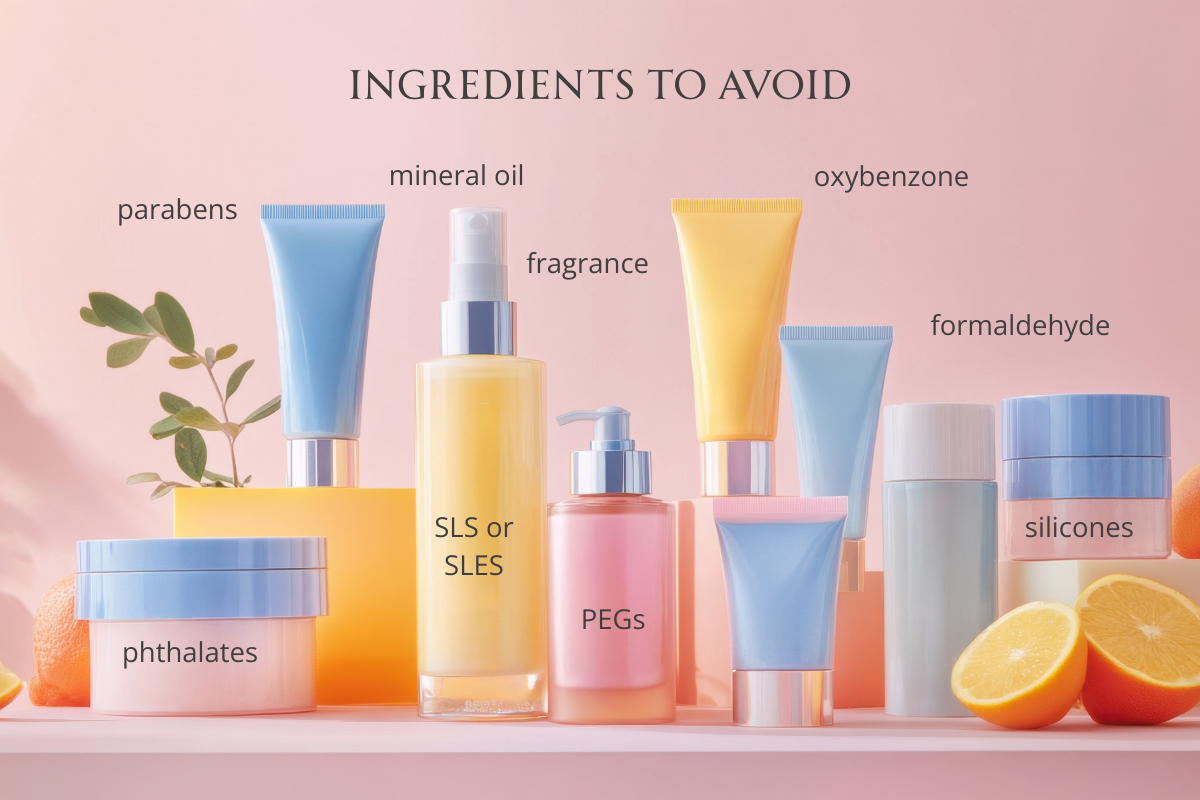
For this blog, we are focusing on our top 11 (all too common) ingredients used in skincare that are endocrine disruptors. Here’s what to look out for when you’re scanning the labels of the items lining your shelf:
- Parabens – Ingredients like methylparaben, propylparaben, butylparaben, and ethylparaben – what a mouthful! Parabens often mimic estrogen in the body, interfering with hormone function.
- Phthalates – Search your labels for DBP, DEP, and DEHP. These endocrine disruptors are chemicals that can impair reproductive development, alter hormone levels (testosterone & estrogen), and have been connected to developmental issues when exposure occurs during pregnancy.
- Fragrance – This commonly used phrase is a catchall (and a loophole!) for skincare companies to add proprietary blends to their products, concealing what they’ve actually added. Be mindful of spotting this tricky ingredient in your products.
- Sodium Lauryl Sulfate/Sodium Laureth Sulfate – Often referred to as SLS or SLES, this ingredient can mimic estrogen in your body and may also interfere with the production of testosterone.
- Formaldehyde – Often used to prevent the growth of bacteria and mold, look out for it in soaps and lotions. Formaldehyde is a carcinogen that can also cause allergic reactions and respiratory illness.
- Polyethylene Glycols (PEGs) – A carcinogen that can contain ethylene oxide and 1,4-dioxane, both of which pose a risk as endocrine disruptors.
- Oxybenzone – Most often found in sunscreen, it causes allergic reactions, has been linked to Hirschsprung’s disease, and is found to be an endocrine disruptor. [1]
- Mineral Oil & Petrolatum – Heavy occlusive ingredients that trap dirt and bacteria under the skin, causing breakouts and irritation. These ingredients often contain polycyclic aromatic hydrocarbons (PAHs), which are known endocrine disruptors.
- Silicones – Check your labels for cyclic siloxanes such as cyclotetrasiloxane (D4) and cyclopentasiloxane (D5), which can disrupt hormones and lead to a variety of health problems.
- Methylisothiazolinone – Hard to pronounce (it’s often shortened to MCI), and even harder on your skin barrier. This ingredient is an irritant that causes chemical burns and allergic reactions.
- Coal Tar – Found in lotions, creams, and bath products; it’s a carcinogen often linked to neurological damage.
Why Trace Amounts of Endocrine Disruptors Still Matter
What if the products you’ve been using all along contain these endocrine disrupting chemicals? You might be wondering if using even a small, trace amount of these ingredients can still be considered disruptive to your endocrine system and hormones.
After all, you’re only using a pea-sized amount of daily face cream with parabens, so does it really matter?
It does, actually. That’s because these chemicals are absorbed directly into the bloodstream through your skin and have been known to build up with time.
Repeated exposure to these endocrine disruptors, even a tiny, somewhat seemingly harmless amount, can still be the cause of hormonal imbalances, inflammation, and negative effects on your reproductive health.
This is especially true for anyone experiencing pregnancy, early childhood, and puberty.
Retinol, Anti-Aging Creams & Alternatives
We have to shine a light on retinol here for a minute. Commonly found in anti-aging skincare products, retinols (such as retinyl palmitate), when applied topically, have been found to cause redness, irritation, burning, dryness, and peeling. [2]
The use of topically applied retinols is also thought to disrupt your thyroid, hormones, and immune system.
With such harsh known side effects, it doesn’t exactly seem like the kind of ingredient that should be applied to your skin and absorbed into your bloodstream.
Furthermore, if doctors suggest that retinol is not safe for use by pregnant women or children, then is it really an ingredient we would want to use on ourselves?
There’s also the contrast of allowable amounts of retinol in the US vs the EU:
US: Currently, in the US, there are no restrictions on the use or sale of retinol for topical use.
EU: However, in the EU, skincare and cosmetics products for use on the face and hands are allowed a maximum of 0.3% Retinol, while body lotions must not exceed an amount of 0.05%. [2]
Retinol is in many prescriptions as well as over-the-counter products. Search the labels on these products for hidden retinols:
- Night creams
- Serums
- Anti-aging products
The label on your skincare products might have it listed as retinol or retinyl palmitate.
Anti-Aging Alternatives: What to Use Instead
If you want a gentle, low-tox approach to anti-aging skincare, swap out products with retinols for these safer, natural, bioavailable alternatives.
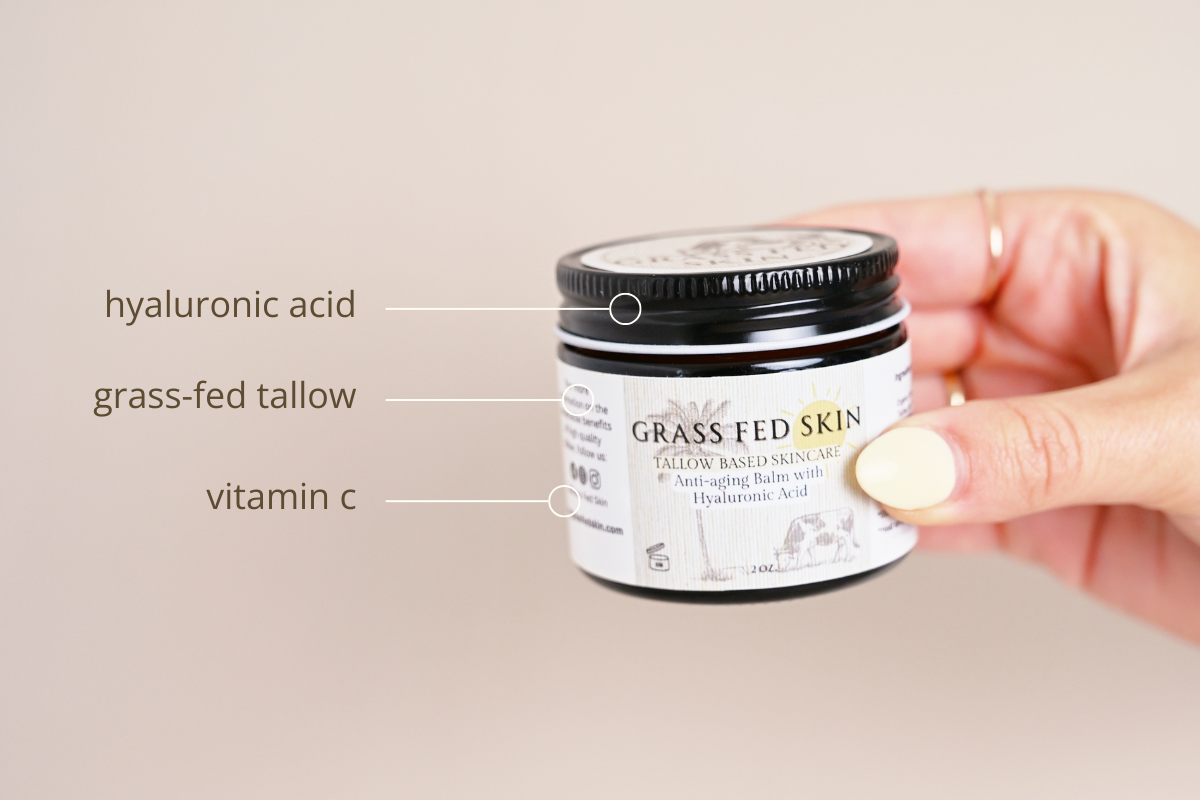
- Hyaluronic Acid – A natural substance found in our eyes and joints; keeps your skin hydrated while promoting elasticity.
- Vitamin C – An essential nutrient found in citrus fruits; this ingredient is a powerful antioxidant that helps brighten your skin.
- Grass-Fed Tallow – Fat rendered from cows, tallow contains vitamins and fatty acids that are biocompatible with your skin, while supporting, nourishing, and moisturizing your skin barrier.
Find the ingredients in our shop >
And for our biggest anti-aging alternative of all – keep reading!
CBG: The Stem Cell Cannabinoid
Now that we’ve called out retinol and those 11 other endocrine-disrupting chemicals, let’s focus on more of the good guys. Like one of our personal favorites, CBG!
CBG, or cannabigerol, is a non-psychoactive, “stem cell” cannabinoid found in hemp & cannabis plants. This naturally occurring powerhouse supports cellular regeneration, reduces inflammation, and protects against aging.
We’ll take our love for CBG even further and tell you that this study showed CBG helped to reduce the skin’s inflammatory response to air pollution. [4]
When used as part of your daily skincare routine, CBG can support your skin barrier while keeping your skin hydrated, making sure those products containing endocrine-disrupting chemicals never have to line your shelves again.
Needless to say, when it comes to CBG skincare, we’re pretty big fans!
Shop some of our favorite Grass Fed Skin products with CGB:
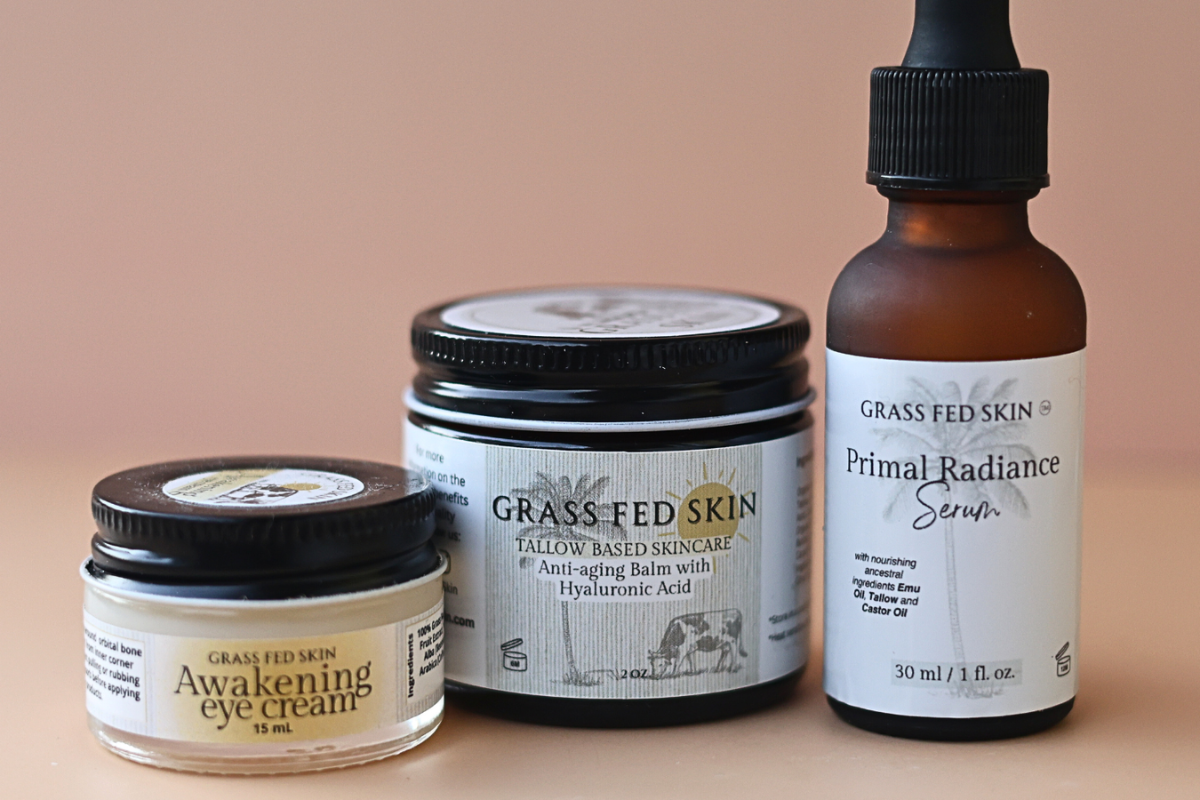
- Anti-Aging Balm with Hyaluronic Acid – Tallow, Vitamin C, Hyaluronic Acid, and CBG work to reduce the appearance of aging, brighten the skin, and defend against environmental stressors.
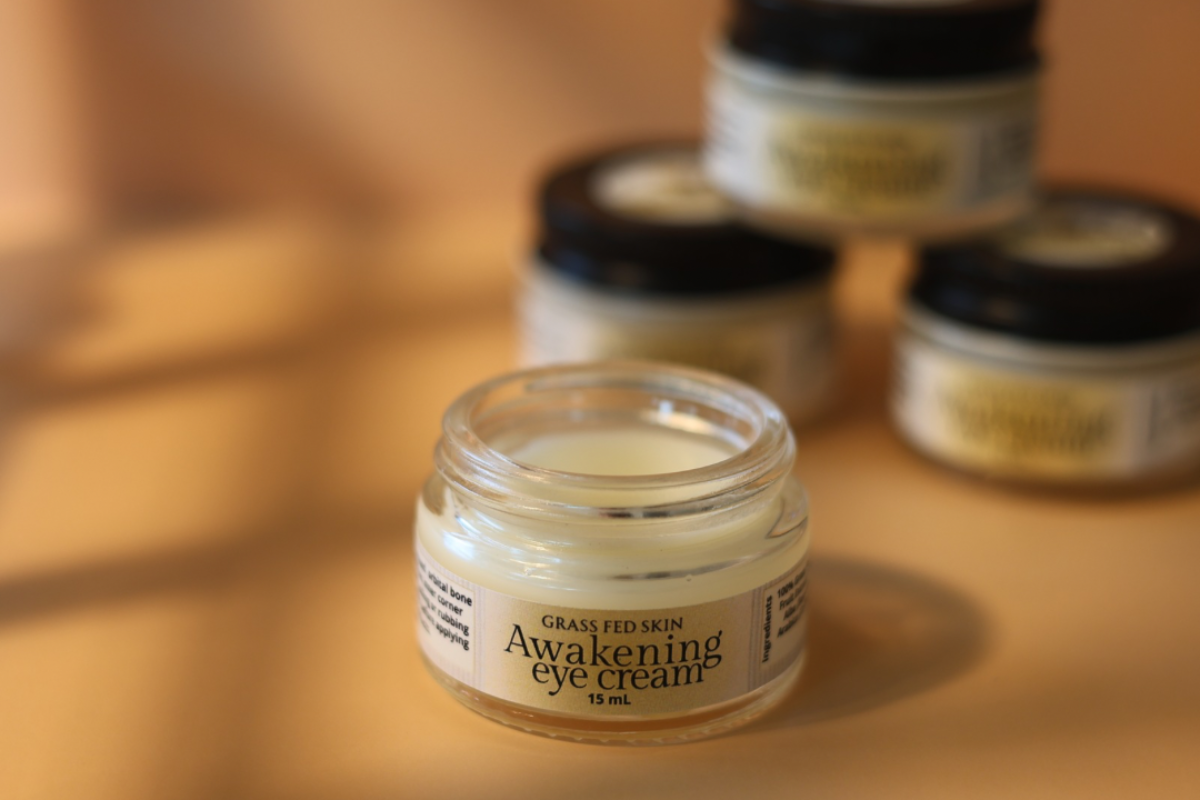
- Awakening Eye Cream – Tallow, botanical extracts, and CBG, hydrate, brighten, and revive the delicate skin around your eyes.
It’s Never Too Late to Make the Switch
If you want to get started with clean skincare, you don’t have to throw everything away and start from scratch; take it one step at a time.
Swap out your anti-aging cream containing retinol for one with tallow, hyaluronic acid and CBG.
Small changes can and do make a difference, setting you off on the path to exploring the benefits of natural skincare with real ingredients.
You don’t have to become label savvy overnight. Check your ingredients for anything ending in ‘paraben’ or look for where fragrance might be listed without any further details. Those are two big red flags you can easily avoid when browsing skincare products and cosmetics while being mindful of hormone disruptors.
We love time-honored ingredients that are natural, easy to recognize, and bioavailable. Our mission, as licensed health practitioners, is to use the ancient wisdom of ingredients found in nature to nourish your skin, without disrupting your endocrine system or hormones.
Browse our shop for skincare products containing tallow and CBG
References
- DiNardo JC, Downs CA. Dermatological and environmental toxicological impact of the sunscreen ingredient oxybenzone/benzophenone-3. J Cosmet Dermatol. 2018 Feb;17(1):15-19. doi: 10.1111/jocd.12449. Epub 2017 Oct 31. PMID: 29086472.
- Narsa AC, Suhandi C, Afidika J, Ghaliya S, Elamin KM, Wathoni N. A Comprehensive Review of the Strategies to Reduce Retinoid-Induced Skin Irritation in Topical Formulation. Dermatol Res Pract. 2024 Aug 17;2024:5551774. doi: 10.1155/2024/5551774. PMID: 39184919; PMCID: PMC11344648.
- https://eur-lex.europa.eu/legal-content/EN/TXT/PDF/?uri=OJ:L_202400996#:~:text=(3)%20In%20light%20of%20the,the%20use%20of%20such%20compounds.
- Luz-Veiga M, Mendes A, Tavares-Valente D, Amorim M, Conde A, Pintado ME, Moreira HR, Azevedo-Silva J, Fernandes J. Exploring Cannabidiol (CBD) and Cannabigerol (CBG) Safety Profile and Skincare Potential. Int J Mol Sci. 2024 Nov 14;25(22):12224. doi: 10.3390/ijms252212224. PMID: 39596290; PMCID: PMC11595262.
DISCLAIMER: THIS WEBSITE DOES NOT PROVIDE MEDICAL ADVICE
The content on this website is for informational or educational purposes only and does not substitute professional medical advice or consultations with healthcare professionals. Always seek the advice of your physician or other qualified healthcare provider(s) with any questions you have regarding a medical condition or treatment and before undertaking a new health care regimen.